

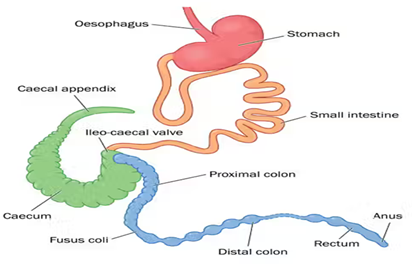
The Digestive System of a Small Herbivorous Mammal.
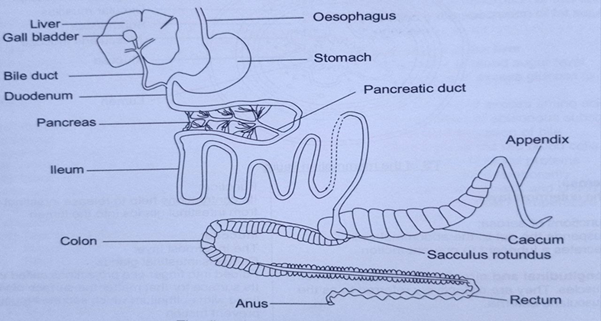 FUNCTIONS OF THE PARTS
Oesophagus: Passage of chewed food into the stomach
Stomach: Storage and churning of food
Liver: Secretion of Bile
Duodenum: Digestion of food
Pancreas: Secretion of pancreatic juice containing pancreatic enzymes
Ileum: Digestion and absorption of food
Caecum: Digestion of Cellulose
Colon: Absorption of Water
Rectum: Temporary storage of faeces
Anus: Ejection of faeces / undigested food
Special Features
Ileum:
- The length of the ileum is about 7 to 8 feet
Adaptation of the ileum
- Large for digestion and absorption
- Lined with villi to provide a large surface area for absorption of digested food
- The wall produces succus entericus, which contains enzymes
Caecum:
- Large
- Presence of appendix
Adaptation of the caecum
- Large to ensure cellulose digestion
- Contains bacteria for cellulose digestion
Colon
- Lined with mucous-secreting cells, which lubricate the canal for easy passage of faeces.
Rectum
- Presence of pellet-like faeces
Review Questions.
Study carefully the diagram below and use it to answer the questions that follow.
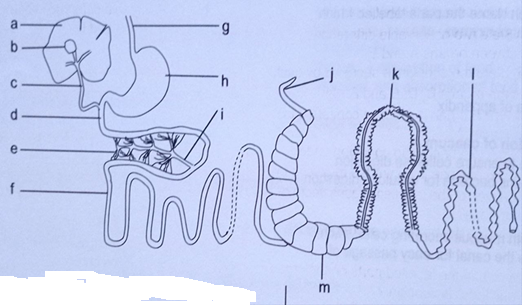
- Identify the specimen in the diagram above
- Give one reason for your answer above
- Name four organisms from which the specimen can be obtained
- Provide the correct terms to the parts labelled from “a” to “m”
- Give one function of each part labelled
- Name the feeding habit of the organism from which the specimen is obtained, giving one reason for your answer