


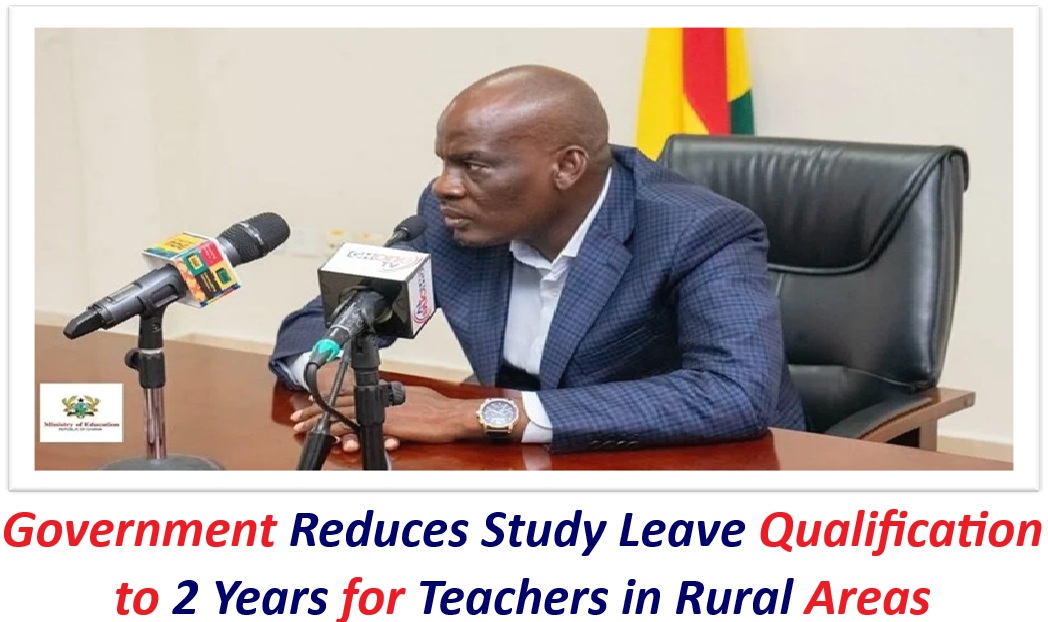
The Government has announced a reduction in the minimum service period required for teachers posted to rural and deprived communities to qualify for study leave with pay, as part of efforts to attract and retain educators in underserved areas.
The Minister for Education, Haruna Iddrisu, disclosed the policy change on the floor of Parliament on July 2, 2026, while outlining measures aimed at improving the welfare of teachers serving in rural communities.
According to the Minister, teachers who accept postings to rural and deprived areas will now be eligible to apply for study leave with pay after completing two years of service, instead of the previous three-year requirement.
Incentives to attract teachers to rural communities
Mr. Iddrisu explained that the reduction in the qualification period forms part of a broader package of incentives designed to encourage teachers to accept postings to hard-to-staff areas.
He noted that the policy recognizes the sacrifices made by teachers serving in deprived communities and seeks to reward their commitment through improved access to professional development opportunities.
Government committed to a 20% rural posting allowance
The Minister also reaffirmed the government’s commitment to implementing a 20 percent rural posting allowance for teachers working in rural and underserved communities.
According to him, the Ministry of Education, the Ministry of Finance, and the Ghana Education Service are collaborating to ensure the successful rollout of the allowance.
The initiative is expected to provide additional financial support to teachers while helping to address persistent staffing shortages in rural schools.
Teacher dabre housing initiative underway.
Mr. Iddrisu further disclosed that discussions are ongoing to operationalize the Teacher Dabre Initiative, a policy proposal aimed at providing accommodation for teachers posted to rural communities.
The housing initiative, which was outlined in the governing party’s manifesto, is intended to address accommodation challenges that often discourage teachers from accepting or remaining in rural postings.
He indicated that the programme would contribute significantly to improving teacher welfare and enhancing retention rates in deprived areas.