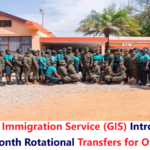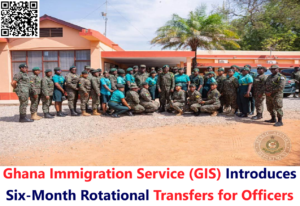


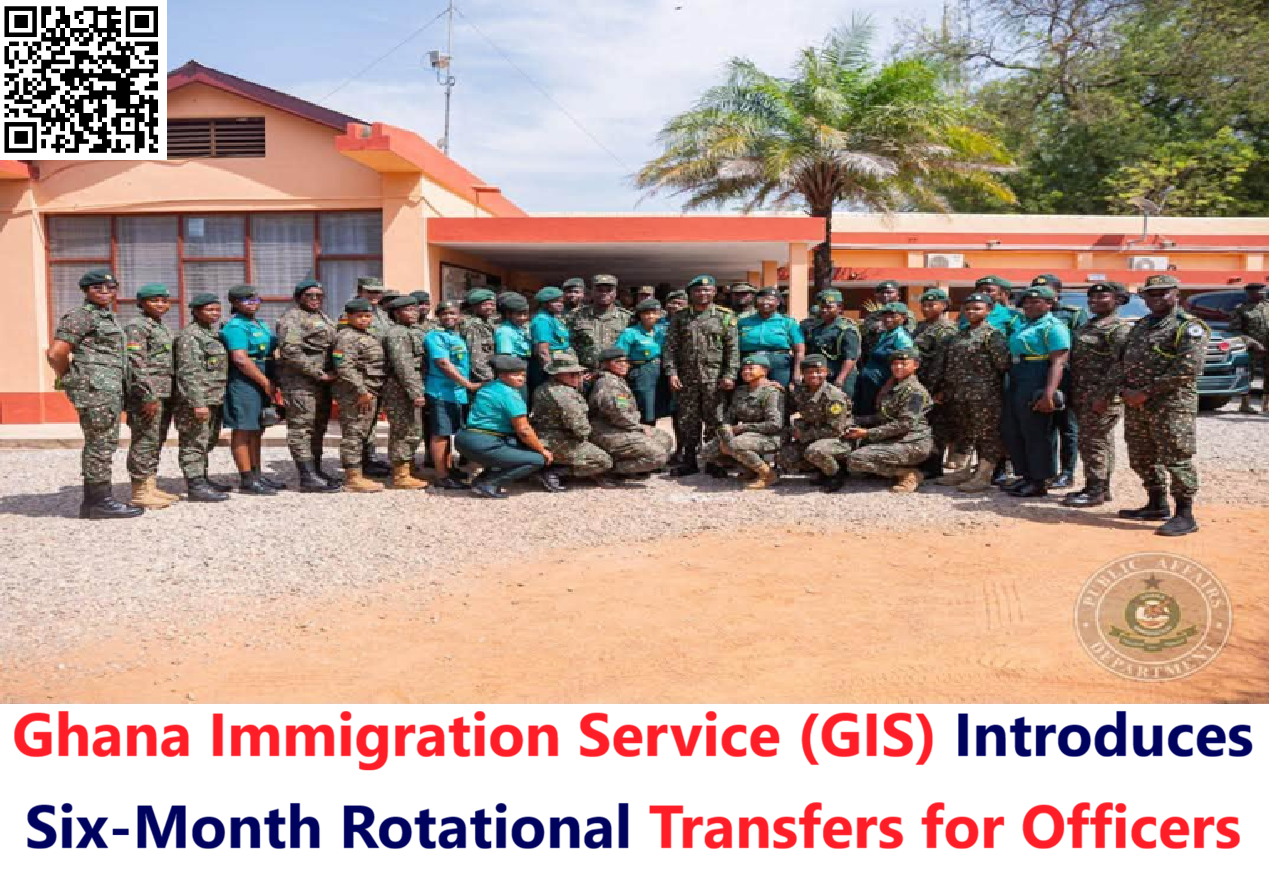
The Ghana Immigration Service (GIS) has introduced a six-month rotational transfer system to ensure officers gain broader operational experience and improve efficiency across regional commands.
The new arrangement will require officers to be reassigned to different sectors and commands within their respective regions every six months, replacing the previous practice under which some personnel remained at the same duty post for four to five years before being transferred.
According to a Facebook post by the Ghana Immigration Service on Thursday, November 12, the Comptroller-General of Immigration, Samuel Basintale Amadu, announced the initiative during an engagement with officers at the Upper West Regional Headquarters.
Amadu explained that the rotational system is intended to expose officers to different working environments, allowing them to acquire diverse operational experiences and develop competencies across various areas of immigration operations.
“The initiative is intended to expose personnel to varied operational environments, broaden their experience, and enhance their professional competencies.
“The new arrangement will replace the previous practice, under which officers could remain at a single duty post for four to five years before being transferred,” the post said.
The move is also expected to provide officers with opportunities to adapt to different operational demands within their regions, while promoting a more versatile and experienced workforce.
The announcement comes days after an explosion along an unauthorized route at Hamile on November 3, which killed an immigration officer and two civilians transporting suspected explosives on a motor tricycle.
The incident occurred during a border patrol operation when a four-member immigration team attempted to intercept the tricycle after detecting unusual activity. The load exploded as the officers tried to stop the rider, killing him and injuring two officers. One of the injured officers later died, while the other was transferred to the 37 Military Hospital in Accra for specialised treatment.
The explosion was followed by disturbances in the community, during which 11 civilians sustained injuries amid confrontations involving residents and security personnel. Nine of the injured civilians were subsequently treated and discharged, while two were referred to the Upper West Regional Hospital for further treatment.