


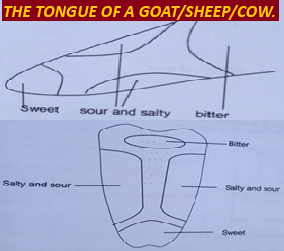
THE TONGUE OF A GOAT/SHEEP/COW.
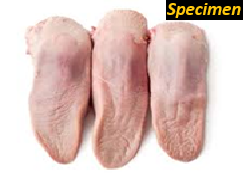 Part of the body it is located
- Mouth/buccal cavity
Describe the tongue
- Pink in colour
- Long and narrow
- Soft and flexible
- The upper surface is rough due to the presence of projections called papillae
Name the organ systems in which the tongue is found.
- The digestive system
- Nervous system/Irritability/sense organ for taste.
Name groups/types of taste buds in the tongue
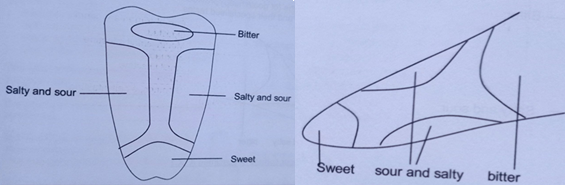
The various regions of the tongue and their specialised tastes
- The tip: most sensitive to sweet
- The sides: sour and salty
- Back: bitter
Draw 8-10cm long of the tongue (of goat/sheep) provided, and in your diagram, indicate the various regions of the tongue and their specialised tastes
 Adaptive features of the tongue
- Papillae /Taste buds to taste and choose food
- Long to move and handle chewed food
- Flexible to handle food
Note the differences between the upper and lower surfaces
- The upper surface of the tongue is rough due to the presence of projections called papillae.
- Sensory cells for taste occur in groups.
- Each group of taste-sensitive cells forms what is called a taste bud.
- Taste buds occur in-between papillae on the upper surface of the tongue.
There are four primary tastes.
These are
- sweet,
- sour,
- salty
- bitter
If a tongue is burnt with too much hot food, the individual may find food tasteless because the taste buds are destroyed.
Functions of the tongue
- Tastes food
- Mixes food
- Swallowing of food
- Directs food
- The tongue is involved in the mechanical digestion of food