
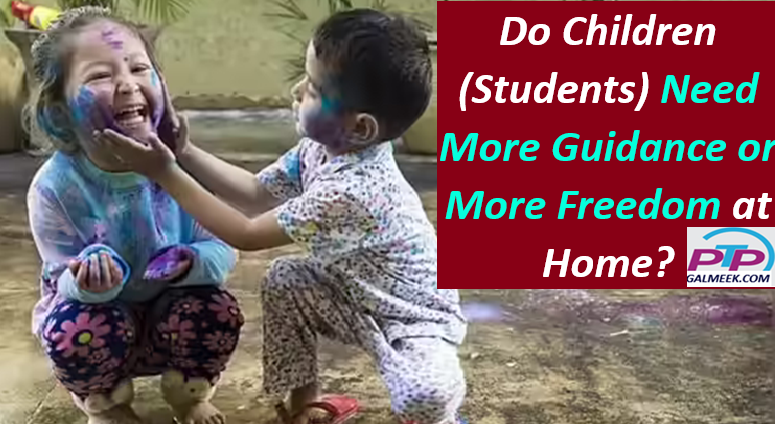
Do Children (Students) Need More Guidance or More Freedom at Home?
The question parents keep circling back to:
Every parent has asked this at some point, usually late at night.
Should I be more hands-on? Or should I step back and let them figure things out?
One day, you’re reminding your child to finish homework.
Next, you’re wondering if you’re hovering too much.
And the answer never feels stable, because kids don’t stay the same for long.
What worked last year suddenly doesn’t.
A child who needed constant reminders now rolls their eyes at them.
Another who seemed independent starts slipping.
So the question keeps coming back, especially when school pressure rises.
Why Guidance Feels Safer.
- Guidance gives structure. Clear routines, check-ins, and expectations.
- For younger students, especially, this is how the day holds together.
- Homework gets done.
- Bags get packed.
- Tests don’t come as surprises.
- And guidance isn’t control.
- At its best, it’s support.
- It’s sitting nearby while they work.
- Asking how school went and actually listening to the answer.
- Helping them break down a big assignment so it doesn’t feel impossible.
- But here’s where it can tilt.
- When guidance turns into constant monitoring, students stop owning their work.
- They wait to be told what to do.
- They panic when an adult isn’t there to fix things.
- And that can quietly chip away at confidence, even when the intention was good.
Why Freedom Feels Risky.
- Freedom sounds nice, but it makes parents nervous.
- What if they waste time?
- What if grades drop?
- What if they don’t care enough?
- And yes, sometimes that happens.
- Students given too much freedom too early can flounder.
- They procrastinate. They forget deadlines.
- They choose comfort over effort.
- Not because they’re lazy, but because planning, time management, and self-control are skills. Skills take practice.
- But freedom also gives something guidance can’t.
- It gives students the chance to feel the weight of their choices.
- To succeed on their own. Or to mess up and recover.
- And that’s how responsibility actually sticks.
So What Do Students Really Need at Home?.
- Most students don’t need more guidance or more freedom.
- They need the right mix, at the right time.
- And that mix shifts as they grow.
- Younger kids need scaffolding. Clear routines.
- Adults who stay close enough to catch problems early.
- Teenagers need something different.
- Less hovering. More trust.
- A sense that home is a place where they can make decisions without being micromanaged.
- But even older students don’t need total freedom.
- They still need boundaries.
- Check-ins that feel like interest, not interrogation.
- Support that shows up when asked, and sometimes when it’s quietly needed.
The Role of Mistakes.
- Mistakes are uncomfortable for everyone.
- Parents want to prevent them. Students want to avoid them.
- But mistakes are often where learning actually happens.
- A missed assignment hurts.
- A bad grade stings.
- But being rescued every time teaches students that consequences aren’t real.
- On the other hand, being left completely alone when things fall apart can feel cruel.
- The middle ground is letting mistakes happen, then helping students reflect.
- What went wrong?
- What could be done differently next time?
- That’s guidance without control. Freedom with a safety net.
How Home Shapes Motivation.
- At home, students learn more than math or grammar.
- They learn how effort is talked about.
- Whether success is praised or expected.
- Whether failure is met with shame or curiosity.
- When home feels like a constant evaluation, motivation shrinks.
- Students work to avoid disappointment, not to learn.
- When home feels disengaged, motivation shrinks too.
- They assume no one cares.
- But when parents stay interested without taking over, something shifts.
- Students feel seen. They feel trusted.
- And they’re more likely to push themselves because the drive comes from inside, not pressure.
So, Where Does That Leave Us?.
- There’s no single answer that fits every student.
- Some need firmer structure.
- Others need space to breathe.
- Most need both, just not all at once.
- Guidance should feel like a hand on the back, not a grip on the arm.
- Freedom should feel earned, not abandoned.
- And the balance will wobble. That’s normal.
- If there’s one thing that seems to matter most, it’s staying flexible.
- Watching the student in front of you, not the ideal version you imagine.
- Adjusting when things aren’t working.
- And remembering that growing up is messy, even when everyone is trying their best.